How to Get Around Korea With Luggage: Bus, Subway, KTX, Taxi & Flights (2026)
 Yunjae
Some links in this post are affiliate links. If you book through them, I earn a small commission at no extra cost to you.
Korea has some of the best public transport in the world. Clean, cheap, on time. Everyone tells you that.
What nobody tells you is what it's like with a 28-inch suitcase.
I'm Korean, and I'm honestly tired of seeing "you can take your luggage on the subway, no problem!" all over the internet. Yes, you can. You're allowed to. But try doing it at 8:30am on Line 2 and tell me how it went.
So here's the honest version. How to get around Korea by bus, subway, KTX, taxi and plane, what actually works with luggage, and how to skip carrying it at all.
Quick answer: what works with luggage?
| Transport | Big suitcase? | My honest take |
|---|---|---|
| City bus | No | Even a small carry-on can get refused. It's the driver's call. |
| Subway | Yes | Fine outside rush hour. Painful at 7–9am and 5–7pm. |
| KTX (fast train) | Yes | Allowed, but rack space runs out. Board early. |
| Domestic flight | Yes | Check it in and forget about it. Great for Busan, Yeosu and Jeju. |
| Express / intercity bus | Yes | Easy. Bags go in the hold under the bus. |
| Airport limousine bus / AREX | Yes | Built for luggage. Best way into the city. |
| Regular taxi | 1 big one, usually | Small trunk. Two big suitcases often won't fit. |
| Large taxi (van) | Yes | Call one in the app if you have 2+ big bags. |
Download these before you land
You'll need four things. Set them up at home, not at the airport with 2% battery.
- Naver Map (or KakaoMap): for directions. Google Maps barely works for walking and driving here.
- Kakao T: for taxis. If it won't take your foreign card, k.ride is Kakao's app made for foreigners (sign up with email, Google or Apple).
- Korail+: for KTX tickets. It replaced the old Korail Talk app in August 2026, and also covers trains from Suseo Station (what used to be the SRT).
- A transit card: T-money or a Climate Card, loaded and ready for the subway and buses.
City buses: no open drinks, no suitcases
City buses are great for short hops, but they come with two rules most tourists find out the hard way.
No open drinks
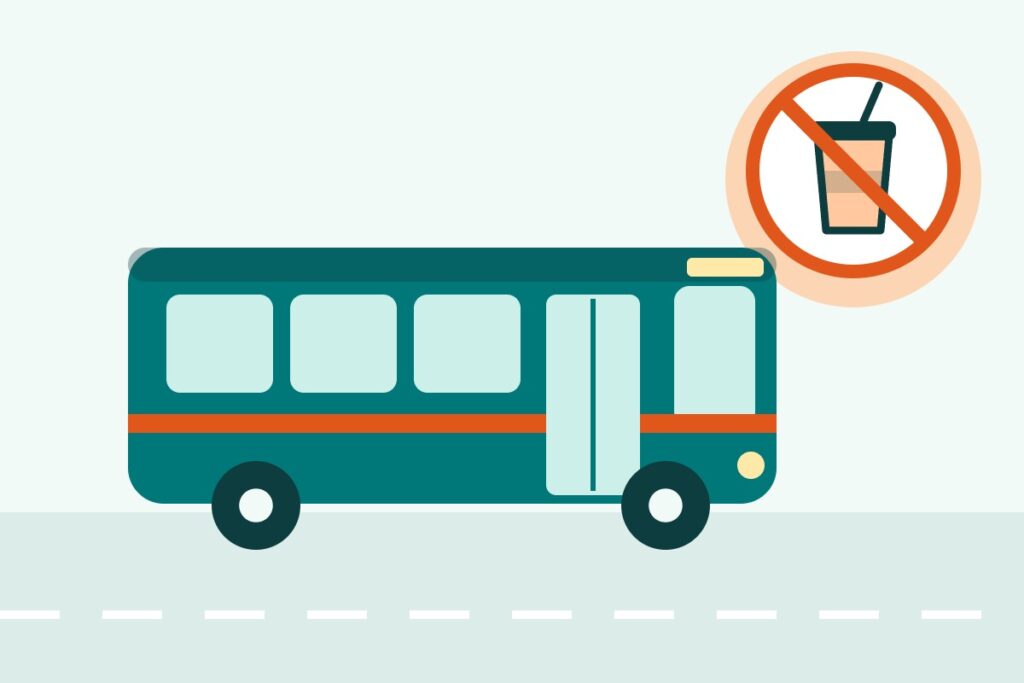
Since January 2018, Seoul city bus drivers can refuse to let you on with a takeaway cup that has a drink or food in it. Iced Americano in hand? Finish it or bin it before the bus comes.
- Not OK: takeaway coffee, bubble tea, an open cup of tteokbokki.
- OK: a closed water bottle, a sealed tumbler, food that's packed to take home (not to eat on the bus).
This is officially a Seoul rule, but drivers in other cities don't love open cups either. Just don't.
Luggage: don't count on it, even with a small one
City buses are for commuters. They're narrow, they get packed, and the drivers drive fast and brake hard. A suitcase rolls into people.
Officially, a small carry-on is usually allowed. In reality it's 100% up to the driver. Here's what I've noticed:
- You'll probably get on if: the bus is half empty, the driver seems to be in a good mood, and you're one person quietly struggling with one bag.
- You'll probably get refused if: you're a group of three or more, each with a suitcase. I've even seen a couple get turned away. Honestly, I have no idea where the line is.
So my advice: backpacks and totes are fine. With any suitcase, even a small one, have a plan B that isn't the city bus.
One more bus tip
Hold on as soon as you board. Korean bus drivers don't wait for you to sit down.
Subway: yes, you can. But not at rush hour
Let's settle it. Can you take a suitcase on the Seoul subway? Yes. There's no rule against it.
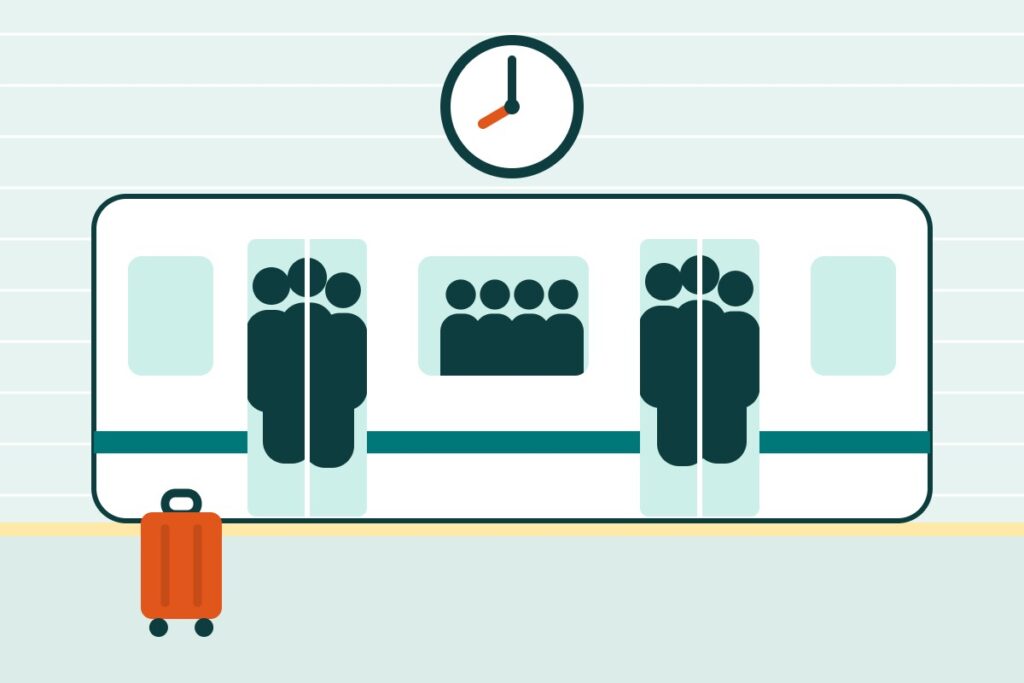
Can you take a suitcase on the Seoul subway at 8am on a weekday? Technically yes. Realistically, you'll be squeezed in with hundreds of tired office workers, blocking the door, and getting looks you'll remember for the rest of your trip. Sometimes you won't even get on.
Avoid these times with luggage
- Morning rush: about 7–9am on weekdays
- Evening rush: about 5–7pm on weekdays
- Worst lines: Line 2 (the green circle line) and the Line 9 express trains. Locals call Line 9 the "hell train" for a reason.
Outside those hours, most trains have room and nobody minds a suitcase.
What makes it hard even off-peak
- Stairs and long transfers. Big stations like Seoul Station, Express Bus Terminal or Jamsil can mean 5–10 minutes of walking between lines.
- Not every exit has an elevator. Look for the elevator signs on the platform before you pick an exit.
- Escalators break. It's not rare to find one out of service, and then it's the stairs with your 23kg.
- Last trains are around midnight. After that it's night buses or a taxi.
Keep it quiet
This one is mostly common sense, but it's the thing that gets the most dirty looks. Korean trains and buses are quiet.
- Don't talk loudly, even with friends.
- Avoid phone calls. If you have to pick up, keep it short and quiet.
- Never use speakerphone or FaceTime out loud. This is the worst one.
- No music or videos without headphones.
Same goes for buses and the KTX. On the KTX, take calls in the space between the cars.
KTX: the fast train, and the luggage fight
The KTX is how you get between cities. Seoul to Busan takes about 2.5 hours. It's comfortable, it's on time, and it has one real problem: there isn't enough space for everyone's suitcases.
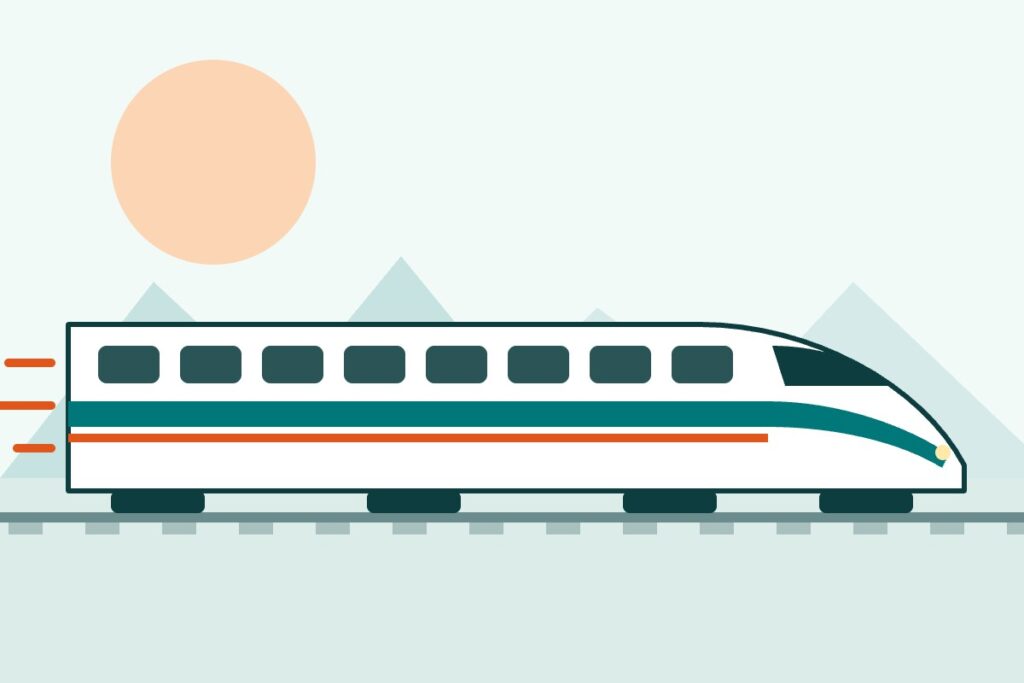
Where your suitcase goes
- Overhead racks: backpacks and small carry-ons only.
- Luggage racks for big bags: on most KTX trains these are at the ends of each car, often outside the seating area. You can't see your bag from your seat.
- No reservations for rack space. It's first come, first served.
This is why you'll see tourists hugging their suitcases in the aisle or wedging them between seats. By the time they board, the rack is full. And some people don't trust leaving a bag where they can't see it.
The newer trains (KTX-Eum and KTX-Cheongryong) are roomier, and KTX-Cheongryong has luggage space inside the cabin. You can't really choose your train type, but it's a nice surprise when you get one.
How to win the luggage game
- Be on the platform 10–15 minutes early. Find your car number on the floor markings and stand right there.
- Board the second the doors open and put your bag on the rack first, then find your seat.
- Pick a seat at the very front or back of the car when booking. You'll be closer to the rack and can keep an eye on it.
- Bring a small luggage lock or cable if leaving it out of sight stresses you out.
- Don't buy a standing ticket if you have a big suitcase. You'll have nowhere to put it or yourself.
Is first class (특실) better for luggage?
A little, but not because of special luggage space. First class uses the same kind of racks, and there's no luggage service included.
What helps is that first class cars have fewer seats (2+1 instead of 2+2), so fewer people are competing for the rack. Standing-ticket passengers aren't allowed in first class either, so it's calmer. More legroom also means a small carry-on can sit at your feet.
My take: if you have one big suitcase and you're travelling on a busy Friday or Sunday, first class is a nice upgrade. If you have two big suitcases each, first class won't fix that. Fly instead, or don't carry them the whole time (more on both below).
Flying: Busan, Yeosu and Jeju
Most people don't think of flying inside Korea, but for some trips it's the easiest option, especially with big luggage. You check your bag in at the airport and pick it up when you land. No rack fight, no trunk problem.
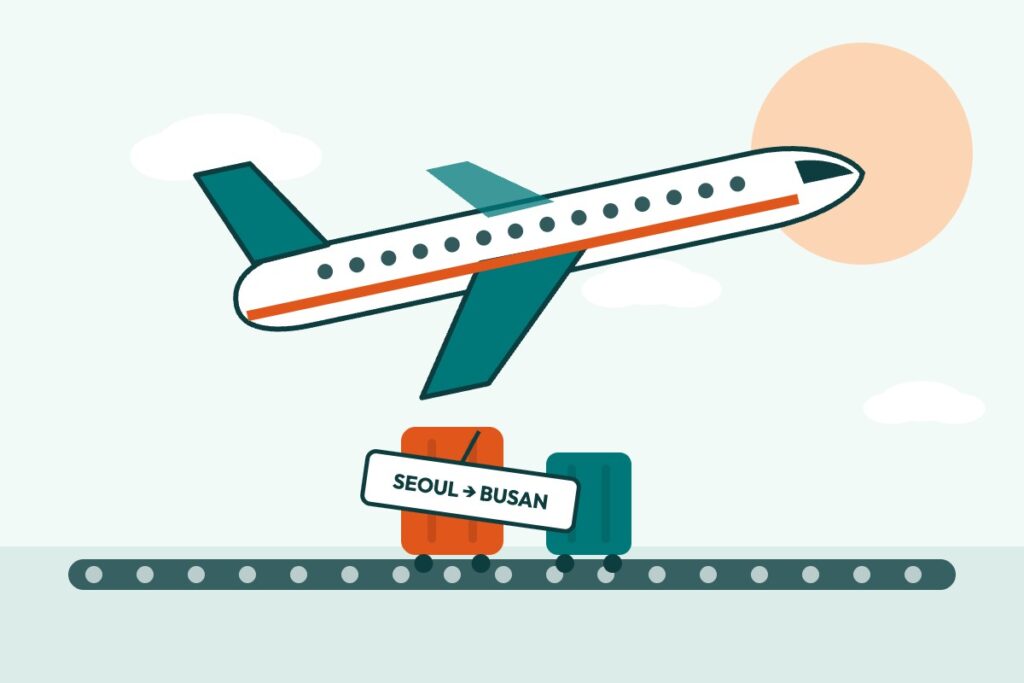
- Leave from Gimpo, not Incheon. Gimpo is the domestic airport, about 20 minutes from Seoul Station on the AREX train. It's small and easy.
- Seoul to Busan: about an hour in the air. The KTX is about 2.5 hours, so the total time ends up similar once you add the airport. But with two big suitcases, flying is way less stress.
- Seoul to Yeosu: about an hour in the air, against about 3 hours on the KTX. This one is an easy win for the plane.
- Seoul to Jeju: the plane is really the only way, and flights leave all day.
- Check your baggage allowance. Full-service airlines usually include 20kg and budget airlines usually 15kg. But a lot of cheap sale fares include 0kg, so check before you book.
- Bring your passport, and get to the airport about an hour before your flight.
The cheat code: don't carry it the whole time
Most travel guides skip this part. You don't need your big suitcase with you every minute of the trip.
Leave the big one behind
- Your hotel will hold it. Hotels keep your bags for free before check-in and after check-out. Use that, don't drag it around Myeongdong.
- Going away for a night or two? If you're coming back to the same hotel, ask them to keep your big suitcase while you go to Gyeongju or Jeonju with just a backpack. Many hotels will do it.
- Lockers: most Seoul subway stations and big train stations like Seoul Station have coin lockers. The big lockers fill up first, so go early. The T-Locker app shows which ones are free.
Send it ahead
- City to city: Korail has an official delivery service on the KTX. You drop your bag at a desk in one station and pick it up at another station later that day. It works between the main KTX stations, like Seoul, Busan, Daejeon and Dongdaegu.
- Station or airport to your hotel: several companies deliver from the big stations and airports to your hotel on the same day. Most only deliver to partner hotels, so check yours is covered.
- Hotel to the airport: in Seoul, you can drop your bags at certain subway stations and pick them up at Incheon Airport.
Look up recent reviews before you book, and don't pack anything valuable or fragile.
Taxis: two big suitcases? Call a big taxi
Taxis in Korea are cheap compared to Europe or the US, and they're the easiest way around with luggage. With one catch.
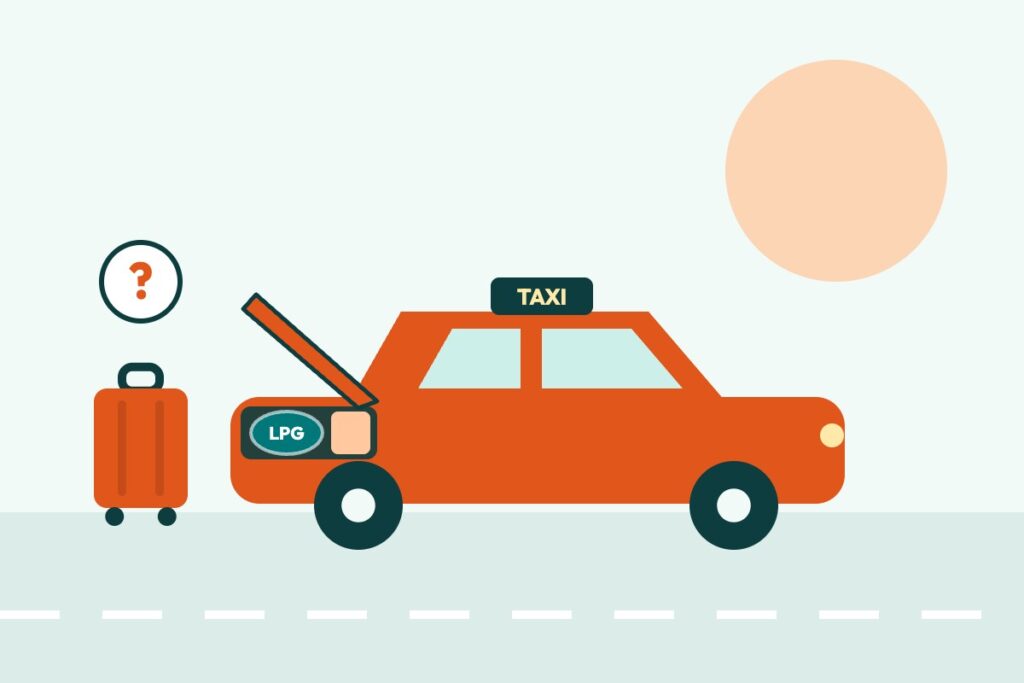
The trunk is smaller than you think
Most Korean taxis run on LPG gas, and in a lot of them the gas tank takes up part of the trunk. One big suitcase, fine. Two big suitcases? Good luck. You'll end up with one on your lap or the driver shaking his head.
You may have seen people get electric taxis with huge trunk space, but that's not always the case. You can't choose the car when you book, so it's random.
If you have two or more big bags, don't wave down a regular taxi. Book a large one.
How to get a large taxi
- Kakao T: choose the large taxi option (Venti or 대형). These are vans like the Hyundai Staria or Kia Carnival with plenty of room for luggage.
- i.M Taxi: another van-style taxi service, mostly in the Seoul area.
- At the airport: there are separate stands for large (jumbo) taxis at Incheon.
Large taxis cost more than a regular one, but less than two regular taxis. And they're easiest to find in Seoul and the surrounding area. In smaller cities, book ahead.
Express buses and airport buses: made for luggage
Ironically, the buses that are best with luggage are the long-distance ones.
Express and intercity buses
Express buses (고속버스) connect almost every city in Korea, including places the KTX doesn't reach. Your suitcase goes in the hold under the bus, so there's no fight for space.
- Cheaper than the KTX, usually by a lot.
- Get a premium seat (우등 or 프리미엄). Only three wide seats per row, and they recline a lot. Honestly more comfortable than a KTX standard seat.
- Main terminals in Seoul: Express Bus Terminal (Gangnam) and Dong Seoul Terminal.
- Book on the T-money GO app for express buses.
- The catch: traffic. Friday evenings and holidays can add hours. Buses use the highway bus lane, which helps, but the KTX is more predictable.
Airport to the city
- Airport limousine buses: they load your luggage underneath and stop at major hotels and neighborhoods. The easiest choice if one stops near your hotel.
- AREX (airport train): the express train goes nonstop to Seoul Station with reserved seats and luggage space. The cheaper all-stop train works too, but it fills up with commuters.
My honest summary
- Small bag only? Use whatever you want. Korea is easy.
- One big suitcase? Subway outside rush hour, KTX if you board early, taxi for the last stretch.
- Two or more big suitcases? Fly if it's Busan, Yeosu or Jeju. Otherwise, leave one at your hotel or send it ahead, and call a large taxi when you have them with you.
- Never: a city bus with a suitcase, or the subway at 8am with one.
Korea's transport is amazing. It's just built for people going to work, not people dragging 23kg behind them. Plan around that and you'll be fine.
Found this helpful? Here's everything I'd sort out before a Korea trip: the eSIM I'd get, the airport train, and where I'd stay. Some are affiliate links, so if you book through them I earn a small commission at no extra cost to you. It's what keeps these guides free.
Going to Korea soon? Grab my free Survival Korean cheat sheet with the phrases, signs and local rules you'll actually use. And follow @yunjaekorean for more honest Korea tips from a local.
Discover more from yunjaego
Subscribe to get the latest posts sent to your email.